
The Boat Show Content Playbook: Before, During, and After (So Your ROI Outlasts the Tents)
Boat shows are some of the most expensive—and most powerful—marketing opportunities brokers and dealers invest in all year. You’re paying for space, travel, inventory movement, staff time, and sponsorships. The mistake many teams make? Treating the show as a three‑day event instead of a three‑month content engine.
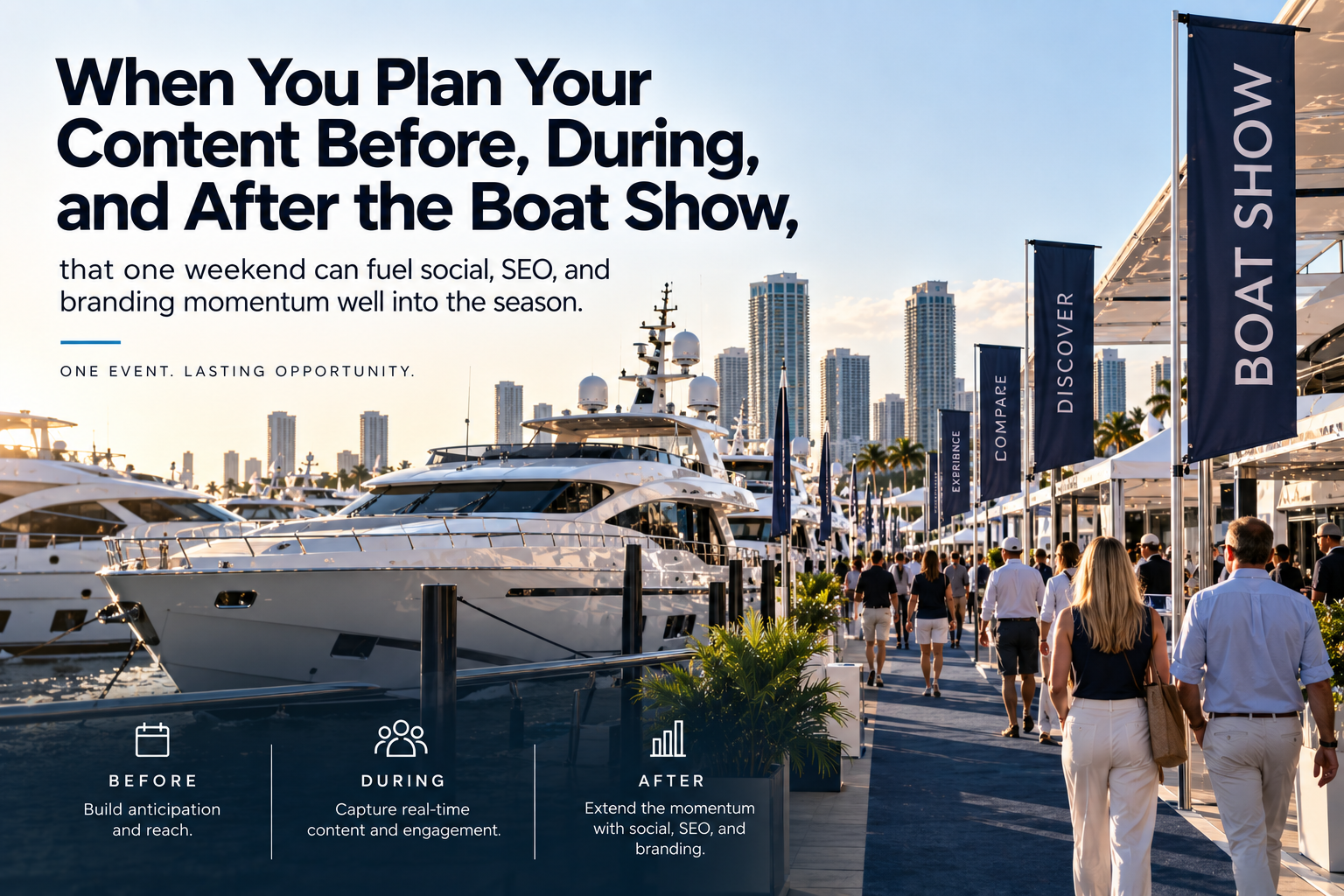
When you plan your content before, during, and after the show, that one weekend can fuel social, SEO, and branding momentum well into the season.
This playbook walks through:
- The content to prepare before the show
- The real‑time coverage that actually performs
- How to turn quick show “footnotes” into long‑term, evergreen marketing assets
- Where YachtPushr fits in to keep everything organized and working in your favor
Before the Show: Build the Content Engine, Not Just the Booth
The work you do 2–6 weeks before the show determines whether it’s a one‑off spike…or a content library you can reuse all year.
1. Define your “show story” and priorities
Don’t just say “We’ll be at the show.” Decide what you want the show to say about your brand for months to come:
- Are you the go‑to team for first‑time buyers?
- Specialists in a specific brand or size range?
- Experts in repowers or refits?
- Leaders in local market knowledge (cruising grounds, slips, marinas)?
That story should shape every asset you create. YachtPushr helps lock this into your content strategy so posts, blogs, and web updates all reinforce the same positioning—not random, disconnected announcements.
2. Prepare your core content assets
For each key model or service you’re showcasing, build a small set of reusable assets in advance:
-
Showcase page or blog post
- “What we’re bringing to the [Show Name]”
- Include: boats, slips/stand location, schedule, staff on site, and why a buyer should visit you versus 20 other displays.
-
Feature highlights for priority listings
- Short write‑ups for each boat with 3–5 key talking points.
- These become captions, email snippets, and post‑show SEO content.
-
FAQ content
- Questions you answer 50 times at every show: financing basics, how trades work, survey/sea trial timing, slip availability, insurance requirements.
- Turn these into short articles or “show guide” content you can publish on your site.
In YachtPushr, you can add your inventory, teams, and positioning once and generate structured content: announcement posts, listing spotlights, and show previews aligned with your brand voice. That content can be scheduled across social and your website so your presence feels coordinated, not last‑minute.
3. Pre-schedule your promotional runway
You want a runway, not a single “We’re here!” post.
Create and schedule:
-
4–6 weeks out:
- “We’re exhibiting at [Show]. Here’s why we go every year.”
-
2–3 weeks out:
- Model and service spotlights showcasing what you’ll have on display.
-
Show week:
- Practical info—how to find you, how to book time aboard specific boats, what to bring.
With YachtPushr, you can batch these in one session:
- Generate posts tailored to LinkedIn, Instagram, Facebook, and your blog.
- Schedule everything so it rolls out automatically—no scrambling from the dock.
During the Show: Capture What Buyers Actually Care About
Content from the show floor doesn’t need to be perfect; it needs to be useful, honest, and timely. Think “field notes from the docks,” not slick TV commercials.
1. Focus on real-world buyer moments
Aim your phones at:
-
Walkthrough highlights
- Quick clips: “3 things buyers love about this cockpit,” “Why this layout works for serious cruising.”
-
Comparisons in plain language
- “Where this 38’ center console beats most 35s.”
-
Local knowledge
- Best places to run this boat from your home marina, fuel range realities, real‑world dockage considerations.
These short videos and photos are gold for later content. YachtPushr turns that raw media into structured posts and future blog outlines—so you’re not sitting with a camera roll full of forgotten potential.
2. Post in real time—but with intent
You want a steady stream, not a flood. Aim for:
- 1–2 “scene-setter” posts per day (the docks, crowds, sunrises, setup)
- 2–4 product or service highlights per day
- 1 recap per day (“Best questions we got today at [Show Name]”)
Use consistent hooks:
- “If you’re shopping between X and Y…”
- “If you’re a first‑time buyer looking at [segment]…”
- “If you fish more than you cruise…”
With YachtPushr, you can:
- Upload photos and notes from the show.
- Let the platform suggest multiple captions and angles.
- Publish directly to multiple channels without juggling apps or passwords.
That keeps your staff focused on buyers, not on fighting with social tools on the dock.
3. Capture conversations, not just visuals
Some of your best content never hits a camera. Capture:
- Common objections (“We’re not ready this season because…”)
- Frequently asked questions
- Phrases buyers use to describe their ideal boat
- Stories they tell about bad prior experiences
Drop those notes into YachtPushr as simple text or voice notes. YachtPushr Intelligence can later surface patterns:
- “Most questions were about fuel burn on 30–40’ outboards.”
- “High interest in financing education content.”
Those patterns become a roadmap for your post‑show publishing plan.
After the Show: Turning Footnotes into Evergreen Assets
The week after the show is where most teams lose the plot. They’re exhausted, they chase hot prospects, and all that great content dies in a phone gallery.
This is where an organized platform pays for itself.
1. Organize and mine your show assets
Gather:
- Photos and videos (walkthroughs, crowds, your stand, night shots)
- Your pre‑written talking points and FAQs
- Notes from conversations and questions
In YachtPushr, you can:
- Attach media to each relevant listing or service.
- Tag content by show name, boat line, or topic (financing, first‑time buyers, refit, etc.).
- Let YachtPushr Intelligence suggest themes and content clusters based on what resonated.
2. Build long-form content that ranks
Use show experience to create durable, SEO‑friendly articles, such as:
- “[Show Name] Recap: 5 Trends Buyers Should Know Before Next Season”
- “Center Console Buying Guide 2025: Lessons from the [Region] Boat Shows”
- “First-Time Boat Buyer Questions We Answered All Weekend at [Show Name]”
Your show notes and real questions fuel these pieces. YachtPushr turns them into structured outlines and drafts, aligned with your brand voice and optimized for search. You edit for nuance and local expertise, then publish to your blog through the same platform.
3. Schedule smart follow-ups, not spam
Instead of blasting a generic “Great seeing you at the show!” across channels, publish themed follow-up campaigns:
- Week 1–2: “Show recap” content and trend insights.
- Week 3–6: Deeper guides related to the questions and boats that drove the most engagement.
- Ongoing: Model‑specific posts repurposed from your best show walkthroughs.
YachtPushr makes this easy by:
- Suggesting a post‑show content calendar.
- Reusing your best-performing show posts in new formats (carousel, blog snippet, short video script).
- Tracking performance so you see which topics actually attract qualified traffic and inquiries.
Boat Shows as a Year-Round Content Asset
When you treat a boat show as a content-production sprint, not just a sales event, you:
- Stretch your show investment across months of visibility.
- Answer the questions real buyers are asking—using real show experience.
- Build a library of articles, posts, and media that positions you as the expert, not just another exhibitor.
YachtPushr is built specifically to help marine businesses do this without hiring a full in-house marketing team. It connects your inventory, brand perspective, and on-the-dock experience into a consistent, SEO-aware content engine—before, during, and long after the tents come down.
If you’d like your next show to power a season’s worth of marketing—not just a weekend spike—reach out to YachtPushr and see how the platform can support your team.